Hinsdale Teardown vs Renovation: What Changes the Math?
August 13, 2026
August 13, 2026
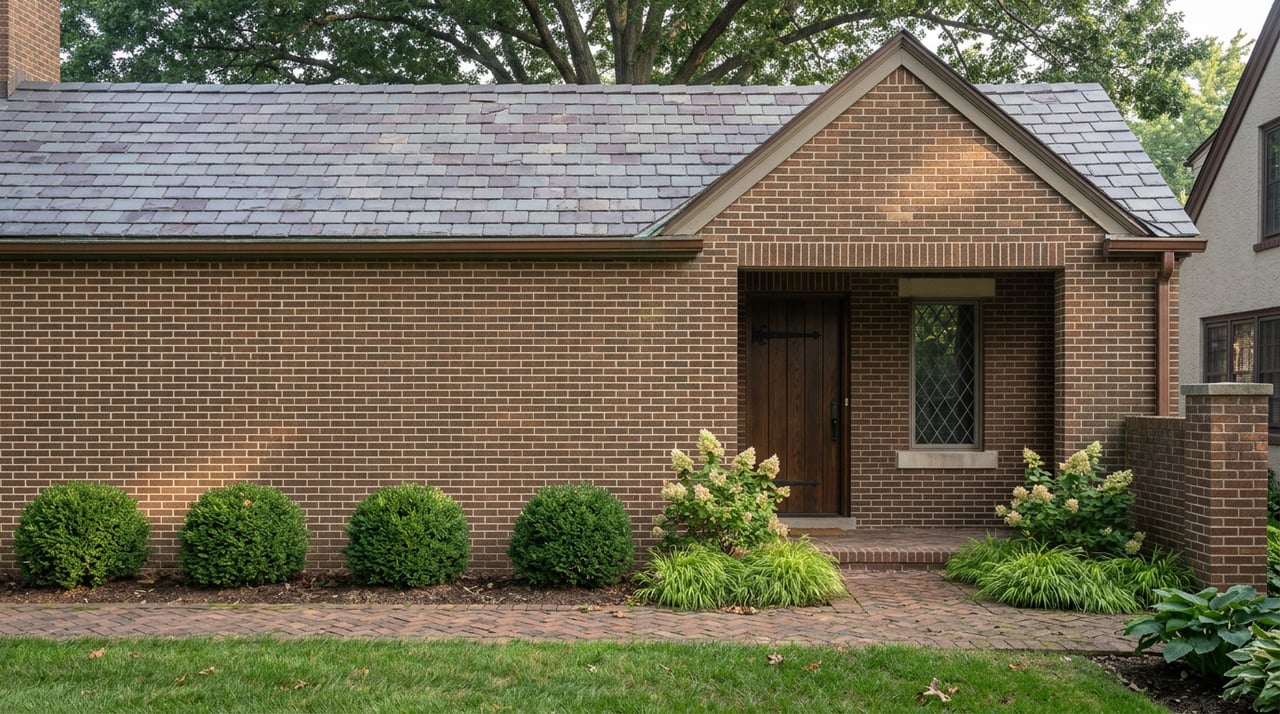
In 2021, Rene and Gus Wonais paid $615,000 for a house on South Clay Street that had been marketed, like a lot of older homes in Hinsdale, as a teardown possibility. They had no interest in demolishing it. This spring, they went to the village and asked for a $9,000 subsidy to replace a set of inoperable windows in the home's enclosed front porch. The Historic Preservation Commission recommended approval.
That single request tells you something the listing sheet didn't: in Hinsdale, "teardown potential" is often a pricing assumption, not a fact. The village has spent the last several years building a financial counterweight to demolition, and it is changing what an older home is actually worth to the person who buys it.
Hinsdale has carried a reputation for teardowns since the 1990s, when it earned national attention as a center of the phenomenon. A member of the village's Historic Preservation Commission has estimated that Hinsdale has lost roughly half its original housing stock to demolition since then, with annual permits once topping 100 a year in a village of about 5,500 single-family homes, according to a Dwell feature on the program.
Then the number moved. In 2023, Hinsdale issued only 26 demolition permits. Village officials are careful not to claim full credit, since it's early, but the timing lines up with the launch of a preservation incentive program that pays owners of older homes to renovate instead of rebuild. That program is now four years old, and the case files it has produced are the clearest evidence available of what it actually costs to keep an old house standing in this village, and what the village is willing to put toward it.
"We knew if we moved it would be a teardown."
That's Katie Raymond, describing why she and her husband chose to add onto their 102-year-old home on North Garfield Avenue rather than sell it, in remarks to Hinsdale trustees this spring.
The program works through a combination of property tax rebates, matching construction grants, waived permit fees, and faster processing. None of it is large by Hinsdale price standards. All of it is designed to tip a marginal decision.
| Address | Project | What the village offered |
|---|---|---|
| 131 N. Garfield Ave. | Rear addition with modern kitchen and fourth bedroom on a 102-year-old home | About $5,160 in property tax rebates over five years, plus a $10,000 matching construction grant, a permit fee waiver, and an expedited review |
| 232 S. Clay St. | Replacement of inoperable windows in an enclosed front porch | A requested $9,000 subsidy, recommended by the Historic Preservation Commission |
| 633 S. Washington St. | Replacement of a 1990s rear addition to better match the home's 1926 Tudor Revival style | A requested $10,000 subsidy for the project, led by architect Richard Olsen |
The math only makes sense next to the cost of the alternative. According to The Hinsdalean, demolition permits inside the Robbins Park Historic District, which is listed on the National Register of Historic Places, run $11,100 as of 2024, up from $7,928, specifically to cover the added staff and consultant review that historic demolitions require. That fee doesn't touch the cost of the new construction itself. It's simply the price of admission to tear something down. A $9,000 or $10,000 subsidy toward keeping a home doesn't erase that gap, but it narrows it enough to change some owners' decisions, which is exactly what the permit count suggests happened.
The program has limits, and the clearest example is the Whitney House at 142 E. First Street, also known locally as the Hallmark House. Built in 1869, it was the first home in Hinsdale placed on the National Register of Historic Places. It sat on the market for six months with little interest from buyers looking to preserve it. When a developer purchased it, the estimated cost to repair the foundation alone ran close to $400,000, on a house where, according to the developer's account to trustees, no wall was plumb and no floor was straight. According to The Hinsdalean, the Historic Preservation Commission denied certificates of appropriateness for both the demolition and the new design in its advisory capacity, but the commission's recommendations aren't binding, and neither the commission nor the village board has authority to block a demolition that meets zoning code. By this spring, a village preservation column was already listing the Whitney House among the year's losses.
Compare that to 121 S. County Line Road, an 1890s home attributed to Frank Lloyd Wright that came close to the same fate in 2021 before buyers Lucas Ruecker and Safina Uberoi stepped in. Their renovation ran about $373,000, with roughly $13,000 coming back through the village's five-year tax rebate structure. The difference between these two houses wasn't the incentive program. It was condition, and it was whether a buyer showed up willing to take on the project before the listing aged into a demolition application.
That's the pattern worth understanding if you're shopping in Hinsdale. The incentive helps homes that are structurally sound but financially borderline. It does not resurrect a foundation that needs $400,000 of work before anyone moves in.
Hinsdale's detached single-family median sale price sits at $1,550,000 on a trailing 12-month basis through June 2026, up 6.9% year over year, with the average sale price running higher at $1,758,948 as more high-end transactions pull the mean up. Trailing-12-month closed sales are down 13.3% over the same period, which points to a selective market rather than a soft one. Homes closest to the downtown core and the Metra station continue to draw the strongest premiums, largely because that proximity is what separates Hinsdale from neighbors like Oak Brook and Burr Ridge in the first place.
Inside that pricing, the teardown-versus-renovate question isn't academic. If a listing describes a home as having "teardown potential," it's worth finding out whether that description reflects the house's actual condition or simply reflects how it was marketed, the same way the Clay Street house once was. The village's Historically Significant Structures Property List has grown to more than 100 homes as of late 2025, meaning a meaningful share of Hinsdale's older housing stock is already flagged for exactly the kind of incentive treatment described above. A buyer who assumes demolition without checking that list, or without checking whether the home sits inside Robbins Park, may have more to learn before deciding what to offer.
Does owning a home in the Robbins Park Historic District mean I need approval for every renovation? Only changes covered under the village's historic preservation ordinance require a certificate of appropriateness, generally exterior work and demolition. Interior changes typically fall outside that review. Confirm specifics for a given address with the village's Community Development department before you write an offer that assumes either outcome.
Is the incentive program only available to landmarked properties? Ask before assuming either way.
How do I find out if a specific address has an incentive request on file? Village board and commission meeting agendas and minutes are public and list historic preservation matters by street address, which is how each of the cases above became public in the first place.
If you're weighing an older Hinsdale home against a teardown lot, the honest answer depends on the specific address, its designation status, and what the village might already be prepared to put toward keeping it standing. That's a conversation worth having before you make an offer, not after.
Lisa Zaklan works both sides of this market regularly, from landmarked properties to new construction, and can walk through what a specific Hinsdale address actually qualifies for. Get Your Instant Home Valuation to start the conversation.
This article is general information, not legal, tax or financial advice. Consult a qualified professional about your situation.

With over 25 years of sales & marketing knowledge and experience, Lisa has built her reputation on integrity & service and believes in using her experience in contract negotiations, sales and marketing to your advantage.