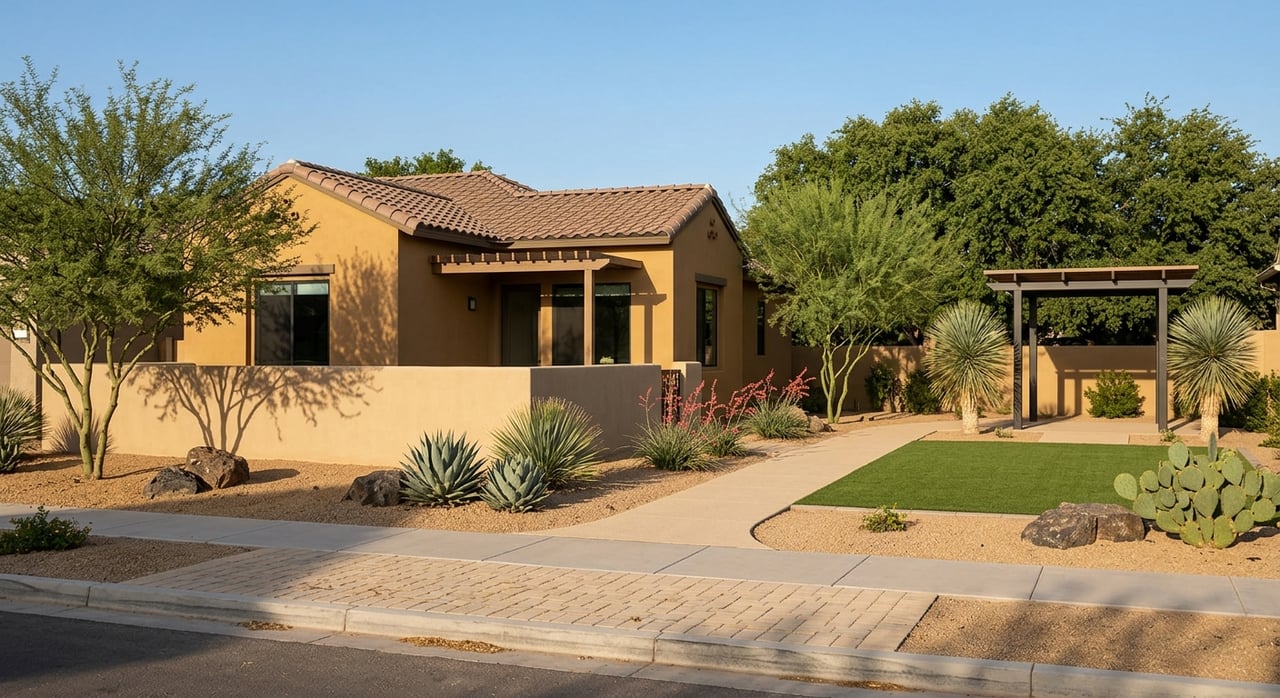
A Guide to Chandler Master Planned Communities
June 18, 2026
June 18, 2026
If you are drawn to neighborhoods with walking paths, shared green space, lakes, or a more polished community feel, Chandler’s master-planned communities may already be on your radar. They can offer a strong sense of structure and convenience, but they also come with rules, fees, and a different ownership experience than a more traditional neighborhood. This guide will help you understand how these communities work in Chandler, what buyers usually find there, and what to review before you move forward. Let’s dive in.
In Arizona, a planned community is a development where the governing documents make homeowners mandatory members of an association and require assessments for management, maintenance, or improvements. The association also has lien rights for unpaid assessments. In practical terms, that legal structure supports the shared common areas and HOA-backed upkeep that many buyers associate with master-planned living.
In Chandler, this community model fits into a city shaped by long-range planning. The city has used Planned Area Development zoning since the 1980s, and its current planning outlook says much of future housing will come through infill and redevelopment rather than large new greenfield projects. That makes existing master-planned communities an important part of Chandler’s housing landscape.
For you as a buyer, that usually means a neighborhood with a more deliberate layout, phased development, and a defined set of community standards. Instead of a simple group of nearby homes, these areas are often designed around shared features, visual consistency, and long-term maintenance. That structure can be a real advantage if you value predictability and a more curated environment.
Chandler’s master-planned communities often center around amenities and outdoor living. In Ocotillo, the community highlights artificial lakes, green spaces, parks, walking paths, recreational areas, and golf access through Ocotillo Golf Club. In Fulton Ranch, the HOA describes a 520-acre master-planned development with a 28-acre lake system, streams, waterfalls, walking paths, covered ramadas, and retail centers.
These examples show a consistent pattern across Chandler. Buyers are often choosing not just a home, but also a neighborhood experience that includes more shared outdoor space, a more intentional streetscape, and a stronger neighborhood identity than a conventional subdivision may offer. The exact mix varies, but the planning approach is usually easy to see.
Many Chandler master-planned communities feature amenities such as:
The broader Chandler setting also adds to the appeal. The city says it has more than 1,300 acres of park land across 70 sites and continues to invest in trails, tree planting, and recreation amenities. That larger public infrastructure can complement what individual communities provide.
Home options are often more varied than buyers expect. In Chandler’s amenity-focused communities, you may find townhomes, detached single-family homes, and larger custom residences, sometimes all within the same overall development.
Some communities are also divided into smaller enclaves with their own design rules or visual identity. Ocotillo’s documents include multiple neighborhood-specific paint palettes, design standards, and community rules, which shows how detailed planning can become inside one larger master-planned area. If you like a consistent look and feel, that can be appealing. If you prefer more freedom, it is something to evaluate carefully.
The HOA is a central part of life in a master-planned community. Because membership is mandatory when required by the community declaration, you are not simply buying a home. You are also stepping into a shared governance structure with dues, rules, and community responsibilities.
That structure often supports the features that attract buyers in the first place. Landscaping, private roads, lakes, gates, and recreation areas all need ongoing care, and association fees are one way that maintenance is funded. In some communities, there may also be both a master association and a smaller neighborhood-level association.
One of the biggest adjustments for buyers can be the approval process for exterior work. In Ocotillo, all exterior changes require approval before work begins. Community documents may also include paint palettes, architectural standards, and other rules that affect how homes can be updated from the outside.
If you are already thinking about repainting, adding a shade structure, changing landscaping, or making other visible improvements, this should be part of your early review. It is much easier to understand the process before you buy than after you move in.
Fees are not one-size-fits-all, even within the same community. Fulton Ranch’s 2026 assessment page lists $672 per quarter for most residents and $990 per quarter for The Island. That difference is a helpful reminder that dues can vary based on location, amenities, and governance layers.
For that reason, it is smart to compare communities carefully rather than assume all Chandler master-planned neighborhoods operate the same way. A higher fee is not automatically a downside, but you will want to understand exactly what it covers and how it fits your budget.
Due diligence matters in any home purchase, but it is especially important in a master-planned community. Arizona law requires key resale documents to be provided in a home sale, including the bylaws, declaration, current operating budget, most recent financial report, reserve study if there is one, and a summary of pending lawsuits.
Arizona law also requires planned-community meetings to be open, with advance notice and agendas, and it requires an annual financial audit, review, or compilation within 180 days of the association’s fiscal year-end, available to members on request. These rules give buyers a better framework for reviewing how an association operates.
Before moving forward, it helps to review:
Arizona also caps the resale-document fee at an aggregate of $400, with limited rush and update fees. That may not change your decision, but it is useful to know as you plan your transaction costs.
For many buyers, the real question is not whether one option is better. It is which option fits the way you want to live. Master-planned communities usually offer more predictability, more shared amenities, and a more coordinated look, while traditional neighborhoods may offer fewer restrictions and a more varied streetscape.
Chandler’s housing mix helps explain this difference. The city says it has more than 112,000 housing units, with single-family homes making up the largest share, along with apartment, condo, and mobile-home segments. Master-planned communities are one part of that broader mix, typically representing the more amenity-rich and intentionally designed option.
Because future housing growth in Chandler is increasingly tied to infill and redevelopment, you may also notice differences in age, lot size, architecture, and HOA intensity across the city. Older or less-structured neighborhoods can feel more eclectic, while master-planned areas often feel more uniform. Neither is right for everyone, which is why lifestyle fit matters so much.
You may prefer a master-planned community if you value:
You may lean toward a more traditional Chandler neighborhood if you want:
Chandler’s appeal is not limited to any one neighborhood type. The city’s long-range planning, employment corridors, and continued investment in parks and infrastructure all support demand for residential communities across the market. For buyers considering a master-planned neighborhood, that larger context matters.
When you combine city investment with the lifestyle features found in communities like Ocotillo and Fulton Ranch, it is easy to see why these neighborhoods stay on many buyers’ short lists. The key is knowing what you are buying beyond the home itself. Amenities, governance, fees, and long-term fit all deserve a close look.
If you are comparing Chandler neighborhoods and want a thoughtful, lifestyle-first perspective on where you may feel most at home, Lisa Zaklan can help you evaluate the details with clarity and confidence.


With over 25 years of sales & marketing knowledge and experience, Lisa has built her reputation on integrity & service and believes in using her experience in contract negotiations, sales and marketing to your advantage.